
Our new campaign shows scenes nobody could stage. Here is why we built them anyway, how we did it, and why we will always tell you which is which.
Koja d'Or exists to give people experiences without limits. That is the actual promise, and it shapes everything from how we staff a chalet to how we answer the phone at eleven at night. So when we set out to build the campaign that defines who we are, the engine behind it had to be unlimited imagination. Nothing less.
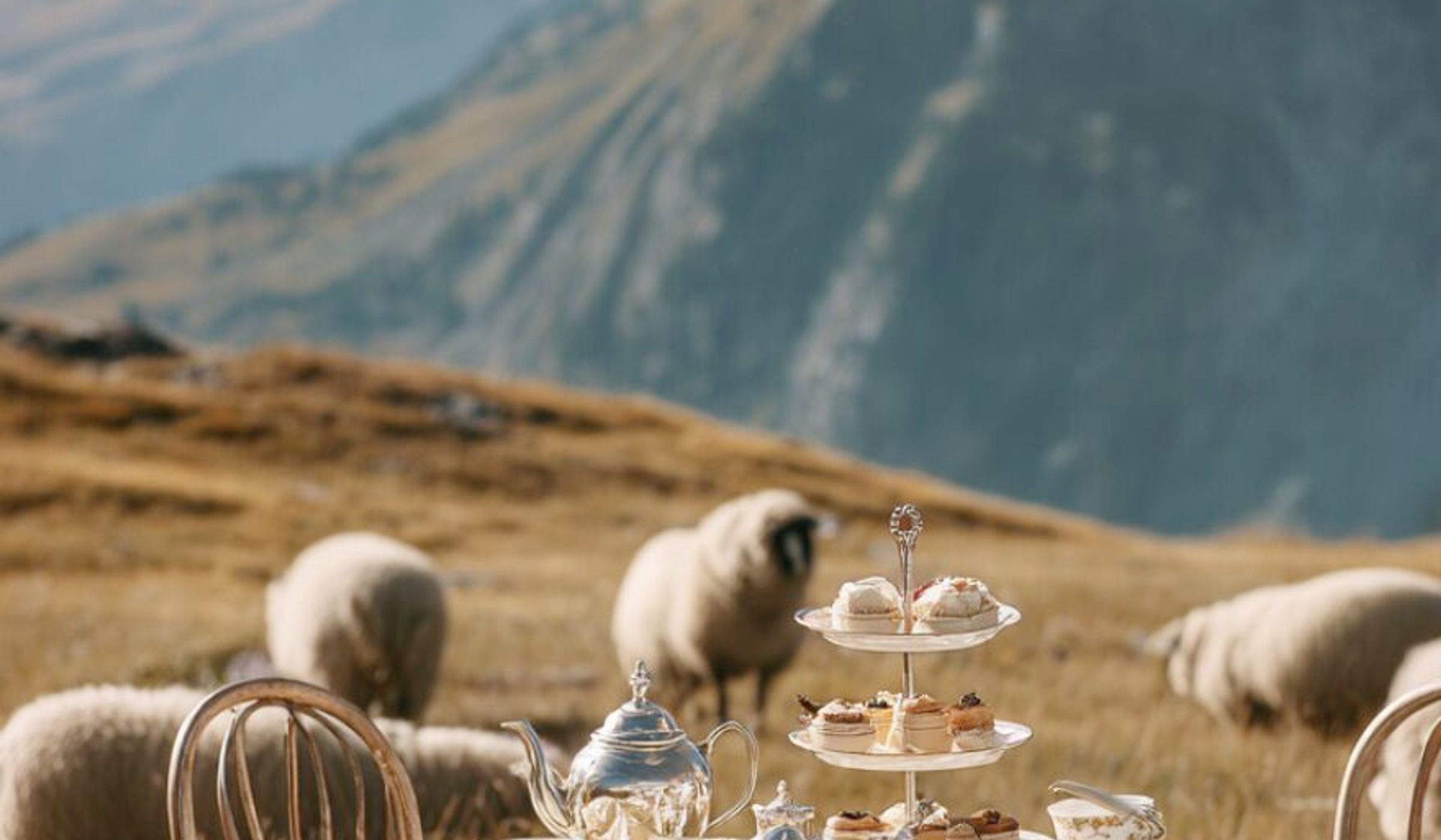
The campaign is called "Happiness is yours to define." A butler hanging from a helicopter, lowered onto a glacier with a bottle of Billecart-Salmon in hand. High tea for two distinguished ladies in the middle of a flock of sheep on a hillside at altitude. A man alone in the woods, drinking from a beaten metal cup, watching deer and owls move through the last light.
None of these scenes could have been staged. You cannot crew a glacier drop on a whim. You cannot easily choreograph a flock of sheep around a linen tablecloth. These are images no production budget would have approved, which is exactly why they are the right ones. Our guests do not ask us for the approvable. They ask for the thing they imagined at two in the morning, and our job is to say yes and then work out how.
So we built the campaign the same way. The scenes were generated with artificial intelligence: imagined, directed, and refined frame by frame until they matched the pictures in our heads. No crew, no shoot, no location unit. Just the stories, rendered.
When we shoot, we will say we shot. When we generate, we will say we generated.
Here is the part we care about most. Not everything deserves this treatment, and we will never pretend otherwise. These films are closer to paintings than photographs, and we are comfortable making them only because we are completely open about what they are. Our properties, on this site and everywhere else, are shown as they truly are, photographed in the rooms you will actually sleep in. The campaign is the dream; the chalets and villas are real, and the difference will always be labelled.
The rest of the craft is not going anywhere. Most stories still need a real director of photography, a real crew, weeks on a real mountain, and the people who work at that level are making things no machine can touch. When a story needs that, we know exactly who to call.
What has changed is the job itself. The work now is taste: knowing which story needs a generated world and which needs a camera in the cold, and sometimes a little of both. The tools are just tools. The backbone has always been, and will always be, the story.
And the story, at Koja d'Or, starts the same way every time. You tell us what happiness looks like. We take it from there.